Automation is one of the best investments there is — but when a machine takes over someone’s work, the value it creates doesn’t vanish; it flows to whoever already owns the automation. The person who lost their income doesn’t share in it. Multiply that across an economy, and you get a lot of people who can’t find decent-paying work, through no fault of their own, while the gains concentrate somewhere else entirely. I’m building a company designed to interrupt that pattern at the root — one where automation’s returns stay permanently with the workforce that builds and runs it, so the people doing the work don’t lose their footing when the work changes.
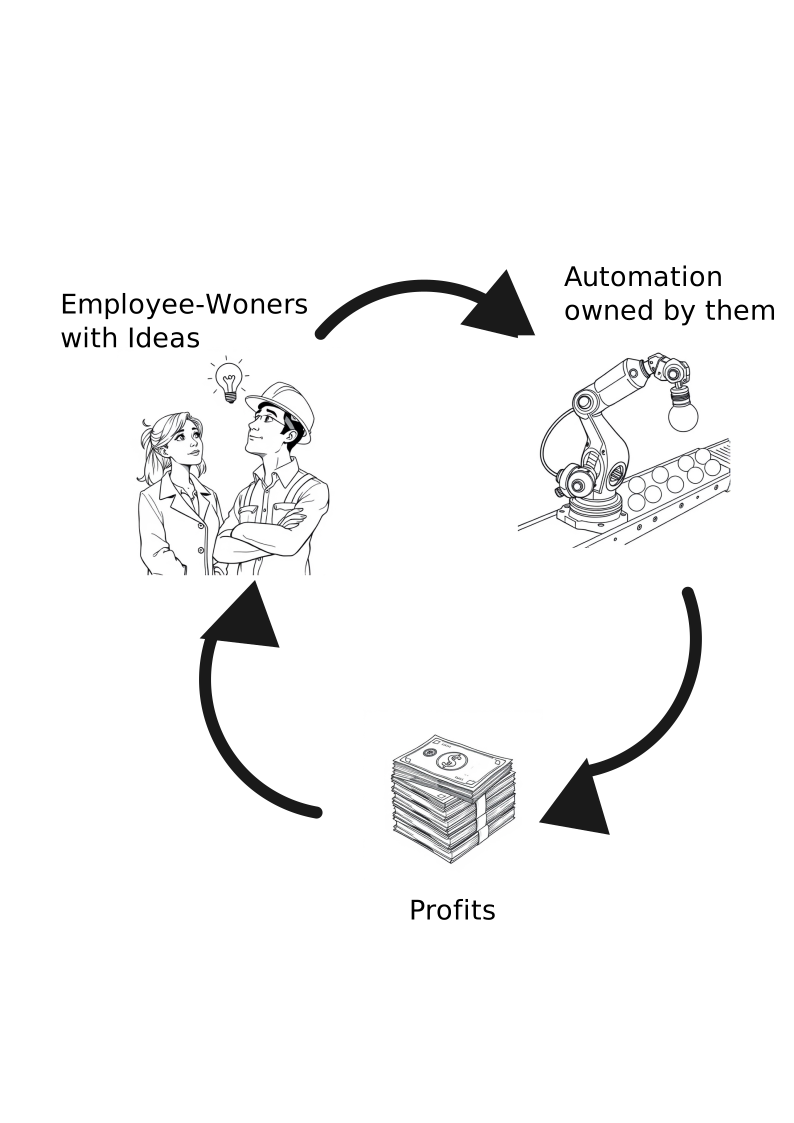
Employee-Owned Firm
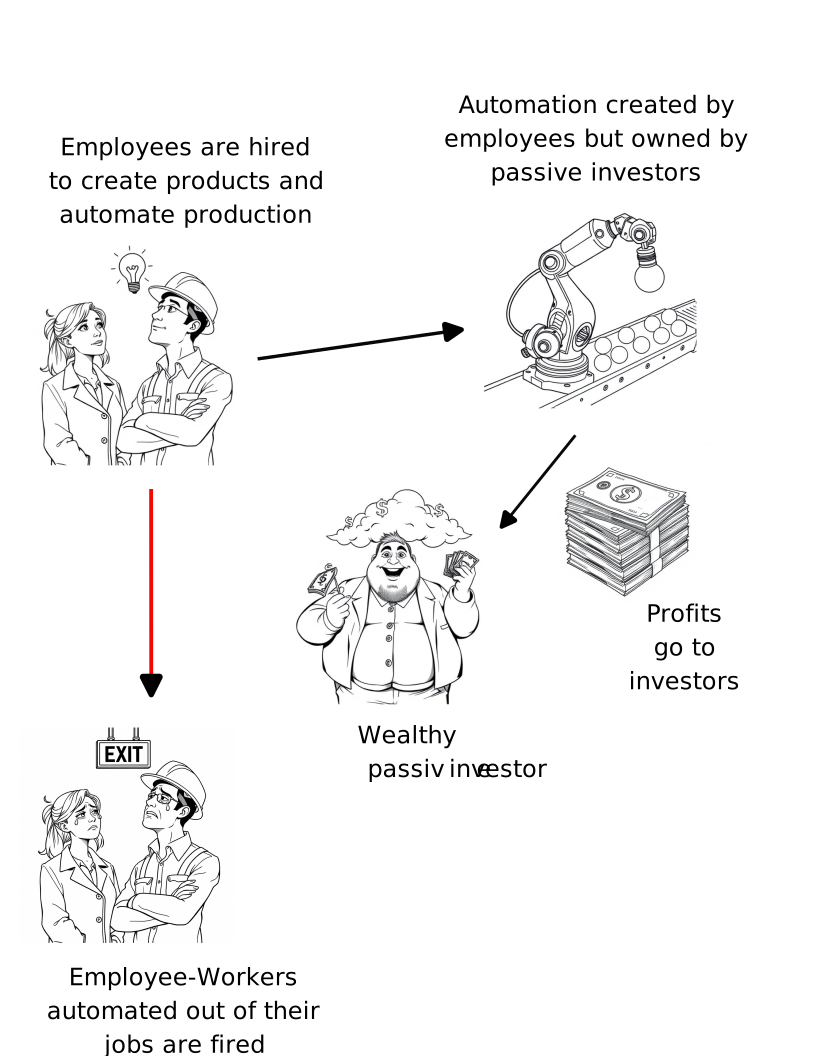
Passive-Investor-Owned Firm
The Proposal
Here’s the actual mechanism behind everything on this page: how
employee ownership works, and why it’s organized as a Perpetual
Employee Ownership Trust (EOT) instead of the more familiar
alternatives.
The Proposal →
Why This Has to Start This Way
Building something like this can’t start the way a normal company
does — there’s no outside investment to raise once the trust
exists to refuse it. That means it has to be bootstrapped first,
before it exists, which comes with its own honest constraints.
Why This Has to Start This Way →
What’s Happening Now
Bostro: A low-cost educational robot, currently on its third
prototype, that I’m developing independently of whether the EOT
ever forms.
Bostro →
Pizza: A mobile automated pizza concept — still early, with real
equipment already in hand — that doubles as a live test of the
whole automation-expert/SME-pairing method.
Pizza →
The Bigger Pattern
Repeating Automation Patterns: The same handful of technical
patterns — closed-loop motion control, vision-guided manipulation
— show up again and again across completely different industries.
Repeating Automation Patterns →
Pairing Automation Experts with SMEs: Automation only works when
it’s paired with someone who actually knows the problem being
automated — here’s the collaboration pattern behind every project
on this site.
Pairing Automation Experts with SMEs →
Vertical Integration: Owning the Whole Chain: Beyond who owns the automation, there’s a
related principle at work in how the company plans to operate:
build and own as much of the value chain as practical.
Vertical Integration: Owning the Whole Chain →
Technologies Involved: Several distinct technologies are
converging right now, and it’s the combination — not any one of
them alone — that’s changing what’s practical to automate.
The Technologies Involved →
Build Something Similar: None of this is meant to describe just
one company — it’s meant to be a method other people could use
too, if they’re facing a similar problem.
Build Something Similar →
Get Involved
How pre-launch collaboration could work: The EOT doesn’t exist
yet, and there’s no hiring — but that doesn’t mean there’s nothing
to do together right now.
Collaborate Pre-Launch →
Support the project: Grants, in-kind resources, space, or labor —
ways to help that don’t require joining anything.
Support the Project →
Collaborating as a peer/fellow builder: Already doing something
adjacent to this yourself? Here’s what collaborating as equals
could look like.
Collaborate as a Peer Builder →
How This Began
Why I’m the one starting this, and why now — the personal
circumstances and reasoning behind the project.
Why I’m Doing This →